Lawn Care for Homes Near Lewisville Lake
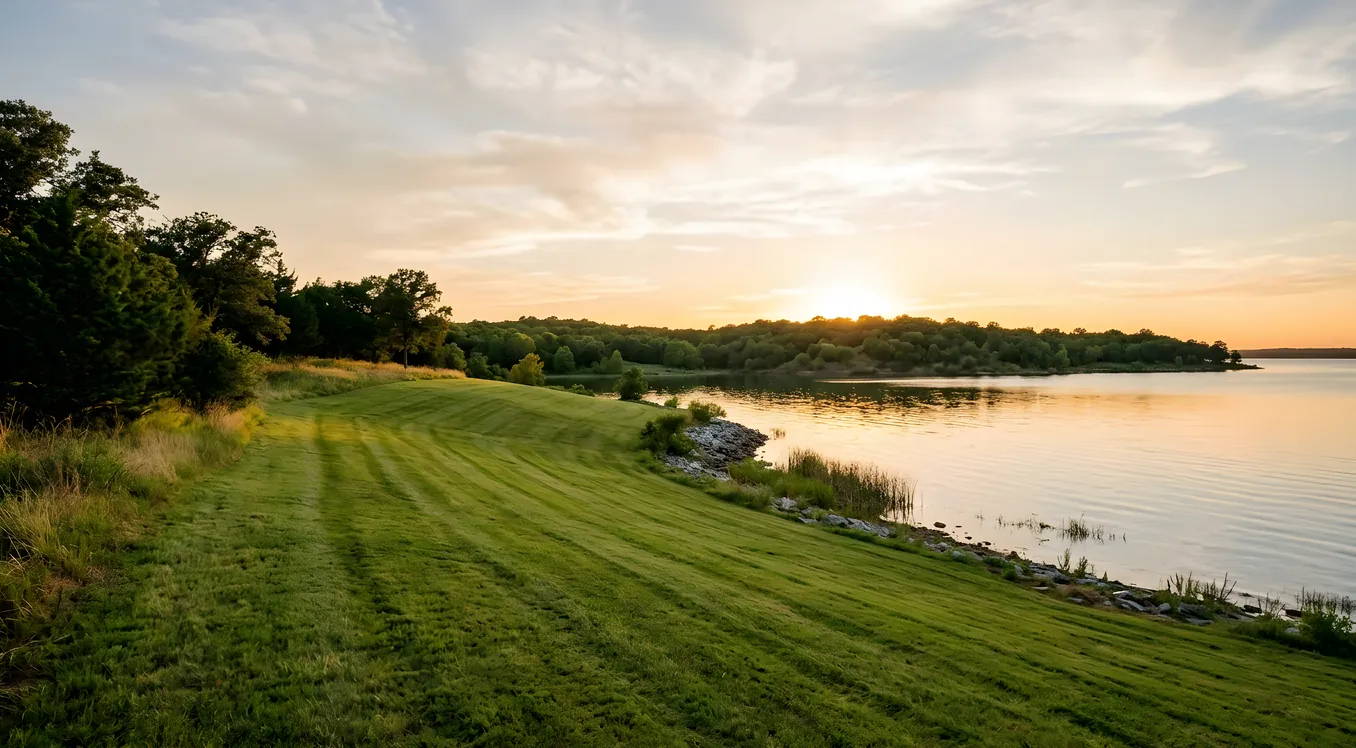
Water and debris from a Little Elm yard can end up in Lewisville Lake. The Town of Little Elm names Lewisville Lake as one of the receiving water bodies for its stormwater program, so runoff that leaves a yard has a real path into the lake rather than vanishing into a storm drain. Little Elm runs this program as a Phase II small MS4 under a state permit, and the Town describes polluted runoff in general terms as one of the country's most significant threats to clean water, asking residents to keep pollutants from leaving their own property in the first place.
Fertilizer is part of that picture too, though not through any rule written for Little Elm or the lake specifically. The fertilizer-runoff guidance available is a statewide Texas program, not a Lewisville Lake watershed program, and it links over-applied lawn fertilizer to the kind of pollution that reaches waterways by way of stormwater. A homeowner near the lake has two direct levers: follow the Town's watering-day rules with a shut-off nozzle, and apply fertilizer at the recommended rate rather than over-applying it.
Where Yard Runoff Actually Goes in Little Elm
Little Elm operates a Phase II small municipal separate storm sewer system, or MS4, under its stormwater program. That program names six water bodies that receive runoff from the town: Lewisville Lake, Cottonwood Branch, the Elm Fork of the Trinity River, Doe Branch, Little Elm Creek, and Pecan Creek. A yard near the lake sits inside a system built around that path. Water and whatever it carries can move from a lawn, across a street or driveway, into a storm drain, and out to one of those named bodies of water without ever passing through a treatment plant.
Dense clay soil under many North Texas yards changes how fast that happens. Slow-draining clay can hold water on the surface longer before it moves, which affects how much has time to run off instead of soaking in; how clay soil affects drainage covers that in more depth.
The Town of Little Elm's own stormwater program lists Lewisville Lake as one of six water bodies that receive runoff carried from yards, streets, and other surfaces across town.
What the Town's Stormwater Program Says About Lawns
Little Elm's Conservation Stage rules address the runoff path described above directly. During the Town's April-through-October watering season, outdoor watering can't be done in a manner that allows runoff or waste, and any hose or sprinkler used outdoors has to have a nozzle with a shut-off. That isn't a generic water-bill tip. It exists because a lawn watered past what the ground can absorb sends the extra straight toward the street, the storm drain, and eventually one of the six water bodies named above.
Fertilizing and Watering in a Way That Keeps Runoff Down
The fertilizer guidance below comes from the Texas Commission on Environmental Quality's Healthy Lawns Healthy Waters Education Project. It's a statewide program, not one written for Little Elm or the Lewisville Lake watershed specifically, and it belongs on this page as general good practice rather than a lake-specific regulation.
Texas A&M AgriLife Extension's management calendars for Bermudagrass and St. Augustinegrass, the two lawn types most common in North Texas, set the working range at 0.5 to 1 pound of nitrogen per 1,000 square feet per application, applied one to four times during the growing season.
Staying inside that range instead of over-applying is the fertilizer-side version of the same runoff logic covered above. Full seasonal timing lives on fertilizer timing for North Texas lawns.
Watering ties back in too. The Town limits sprinkler watering to twice a week in summer and once a week in winter, with no watering between 10 a.m. and 6 p.m. from April through October, and this applies to lake-area homes the same as anywhere else in Little Elm. See the Town's full watering schedule for the current days, hours, and exemptions.
Homeowners who want the fuller picture of what shapes lawn care in Little Elm, beyond this one topic, can start with the Little Elm Lawn Guide. For homes near the lake, the two things worth doing are simple: keep watering inside the Town's rules, and keep fertilizer inside the rate above. Homeowners looking for help with either step can compare local lawn care companies that serve the area.
Frequently Asked Questions
Does lawn care near Lewisville Lake actually affect the lake's water quality?
The Town of Little Elm's own stormwater program lists Lewisville Lake as one of six water bodies that receive runoff carried from yards, streets, and other surfaces across town. The Town describes polluted runoff in general as one of the nation's most significant threats to clean water. That statement is the Town's own position on runoff generally, not a claim specific to any one yard or block.
Is there a Little Elm‑specific fertilizer program for lake‑area lawns?
No. The fertilizer-and-runoff guidance available for Texas lawns comes from the Texas Commission on Environmental Quality's Healthy Lawns Healthy Waters Education Project, and the agency runs that program statewide. It was not written for the Lewisville Lake watershed or for Little Elm specifically, so it should be treated as general good practice rather than a local or lake-specific rule.
What can a homeowner near the lake do to reduce runoff from their own yard?
Two concrete steps apply directly. During the Town's April-through-October watering season, water with a hose or sprinkler nozzle that has a shut-off, and stop watering as soon as runoff starts moving toward the street, per the Town's Conservation Stage rules. Keep fertilizer applications inside the nitrogen rate rather than over-applying. Homeowners who want help with either step can compare local lawn care companies that serve the area.