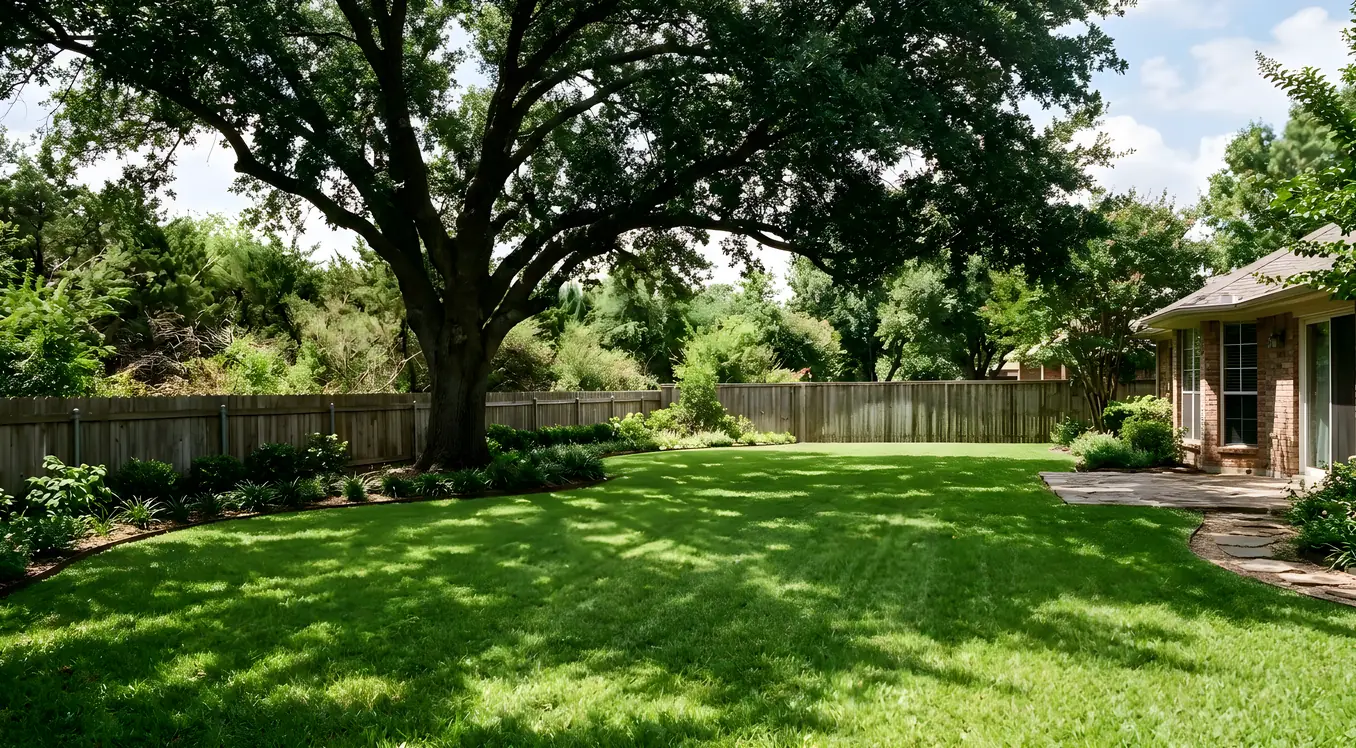
Lawn Care Services in Little Elm, TX
This section covers eight lawn care services: fertilization, weed control, fire ant treatment, grub control, brown patch and other lawn fungus, common lawn insects, tree and shrub feeding, and mowing. Each guide below breaks down what one of those services actually involves, so you know what a company is doing before you call one.
If you already know what is wrong in your yard, whether it is weeds, fire ants, or brown spots, skip ahead to that guide instead of reading the list in order.
- Lawn Fertilization in North Texas: Timing and Rates
- Weed Control for North Texas Lawns: Pre‑Emergent Timing
- Fire Ant Treatment for Little Elm Lawns
- Grub Control: Signs and Treatment Timing
- Brown Patch and Other Lawn Fungus: Identification and Treatment
- Common Lawn Insects in North Texas Yards
- Tree and Shrub Feeding Alongside Lawn Care
- Lawn Mowing Basics: Height, Frequency, and the One‑Third Rule
Matching Your Symptom to a Guide
A dead or damaged patch of grass rarely explains itself right away, but its shape and the time of year usually narrow it down. Circular or semi-circular patches that show up as St. Augustine grass goes into or comes out of dormancy, in fall, winter, or spring, and that spread fastest between 75 and 85 degrees, point toward brown patch fungus rather than an insect problem. Ragged, irregular-edged dead patches in St. Augustine grass point toward chinch bugs instead, one of three insects covered in the common lawn insects guide. Visible ant mounds, most active in Little Elm from May through September, point toward fire ants. Grass that thins from the roots up, with the underground feeding worst between June and October and typically peaking in July, points toward grub damage rather than a surface pest or fungus.
Matching the Calendar to a Guide
Several of these services are tied to a specific window rather than a general season, and calling too early or too late wastes the visit. Pre-emergent weed control goes down twice a year: once when spring soil temperature holds near 55 degrees for several consecutive days to catch crabgrass, and again in fall near 70 degrees to catch winter weeds like henbit. Fertilization follows the growing season for both St. Augustine and Bermuda grass, with St. Augustine's last feeding timed 4 to 6 weeks before the first frost. Once summer daytime soil temperatures climb past 90 degrees, fire ant bait works best when it is put down in the evening. Fall armyworm outbreaks tend to follow heavy rain in August and September, while preventive grub treatment works best from early spring through early summer, before the grub itself gets too large to control easily.
Why Your Grass Type Changes the Answer
St. Augustine and Bermuda lawns do not share every vulnerability equally. Chinch bugs mainly target St. Augustine grass, while grubs and fall armyworms show up on both St. Augustine and Bermuda lawns. Fertilization uses the same per-application nitrogen rate for both grasses, but the calendar around it differs: Bermuda waits for full spring green-up before its first feeding and skips hot, dry late-summer stretches, while St. Augustine's schedule is built around its dormancy and frost dates instead. A homeowner unsure which grass they have can check it before working through the guides above, since the same symptom can point to a different cause depending on the lawn underneath it. Local conditions in Little Elm, including watering rules and soil type, add another layer worth knowing before diagnosing a problem; the Little Elm lawn guide covers those specifics.
Recurring Maintenance vs. One‑Time Problems
Not every guide on this page responds to a symptom. Mowing and fertilization are scheduled, recurring jobs rather than problems to diagnose. The one-third rule sets the mowing schedule: a Bermuda lawn kept at 1 to 2 inches gets mowed once it reaches about 3 inches, whether that takes five days or twelve, with weekly mowing the general expectation through the growing season.
Tree and shrub feeding works differently again: Texas A&M AgriLife Extension generally points to late winter, just ahead of spring growth, as the best time to feed woody plants. It also notes that in many yards a good lawn program may remove the need for extra fertilizer for trees growing in the lawn, that extra fertilizer is occasionally needed for trees whose roots are hemmed in by streets or curbs, and that border shrubs are often missed by a lawn feeding program. Whether a company includes it or prices it separately varies, so ask. Pale or yellowing leaves with no clear seasonal cause, a thinner canopy, or slower new growth are reasons to ask about this service, not signs of a lawn problem on their own.
Checking Who Can Legally Do the Work
Not every one of these services requires the same kind of hire. Plain fertilizer applications do not require a Texas Department of Agriculture license, but adding any pesticide to that same visit, including weed killer, fire ant bait, or grub control, does. That distinction is worth knowing before comparing quotes, since a company offering only fertilization is not the same as one offering fertilization plus pest control. Before agreeing to any of these services, it helps to know how to compare and vet a lawn care company serving Little Elm. Homeowners can see how Little Elm lawn care companies compare before deciding who to call for any of them.