Lawn Fertilization in North Texas: Timing and Rates
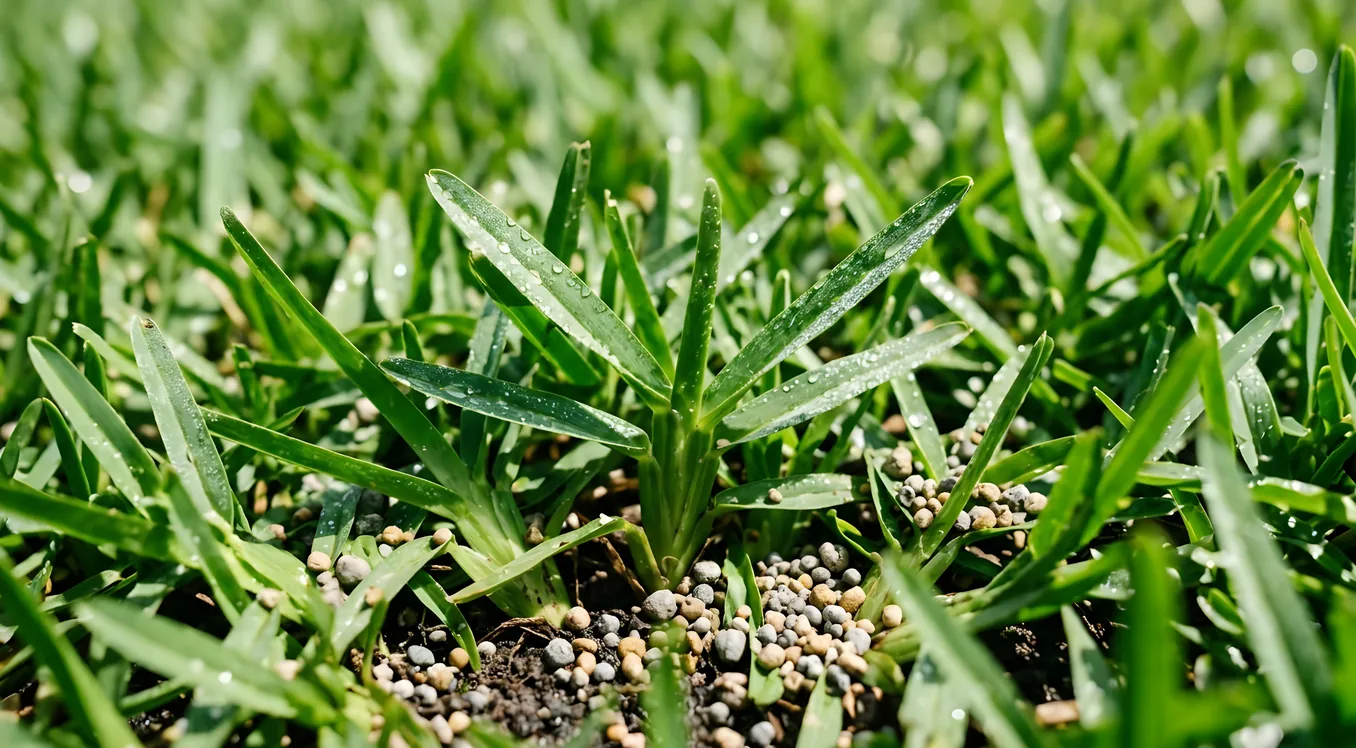
St. Augustine and Bermuda grass in North Texas both take 0.5 to 1 pound of nitrogen per 1,000 square feet per application, applied one to four times during the growing season, according to Texas A&M AgriLife Extension. St. Augustine's last nitrogen application should land 4 to 6 weeks before the first historic frost, and its yearly total shouldn't pass 4 pounds of nitrogen per 1,000 square feet. Bermuda follows the same per-application rate but waits for full spring green-up before the first feeding and skips hot, dry late-summer stretches. Neither grass should be fed while stressed by drought, heat, or disease. One more distinction matters for anyone hiring the work out: applying fertilizer alone doesn't require a Texas Department of Agriculture license, but adding any pesticide, including a weed killer, to that same visit does.
When to Fertilize St. Augustine Grass in Texas
St. Augustine grass takes its nitrogen during the active growing season, in one to four separate applications rather than a single heavy feeding. Spacing the applications out gives the grass a steady supply instead of a spike it can't use all at once, and it lowers the runoff risk that comes with putting down more nitrogen than the lawn can absorb in one pass.
Timing the last application matters as much as the total for the year. AgriLife recommends the final nitrogen feeding land 4 to 6 weeks before the area's first historic frost date. Fertilizing too close to frost pushes new, tender growth right before cold weather can damage it, and that new growth also drains energy the grass would otherwise be storing for dormancy.
Don't fertilize St. Augustine grass while it's under stress. A lawn coping with drought, heat stress, or an active disease outbreak can't process nitrogen the way a healthy lawn can, and feeding it during that window tends to make the underlying problem worse rather than helping the grass recover.
How Much Nitrogen St. Augustine Grass Needs
Each application should deliver 0.5 to 1 pound of nitrogen per 1,000 square feet, per Texas A&M AgriLife Extension guidance. That range covers most residential St. Augustine lawns; going higher within a single application doesn't speed up growth so much as raise the odds of burning the grass or feeding disease instead of the lawn.
There's also a ceiling for the year as a whole: total nitrogen shouldn't exceed 4 pounds per 1,000 square feet across all applications combined. A lawn fed at the high end of the per-application range needs fewer total feedings to stay under that number, while a lawn getting smaller, more frequent doses can spread the same total across more visits.
AgriLife's guidance calls for a combination of quick-release and slow-release fertilizer rather than either type alone. Quick-release nitrogen is available to the grass almost immediately, while slow-release nitrogen breaks down over weeks, so blending the two gives the lawn an early start without dumping the whole application's nitrogen into the soil at once.
St. Augustine and Bermuda lawns in North Texas both take the same per-application rate, 0.5 to 1 lb of nitrogen per 1,000 square feet, per Texas A&M AgriLife Extension.
Fertilizing Bermudagrass on the Same North Texas Calendar
Bermudagrass uses the same per-application nitrogen rate as St. Augustine, 0.5 to 1 pound per 1,000 square feet, and the same range of one to four applications a year during the growing season, per Texas A&M AgriLife Extension. The rate doesn't change between the two grasses; what changes is the calendar around it.
Bermuda needs its owner to wait for full spring green-up before the first feeding of the year. Fertilizing too early, while the grass is still transitioning out of winter dormancy, feeds a lawn that isn't actively growing yet and wastes the application.
The same logic applies at the other end of the season. AgriLife guidance calls for skipping fertilization during hot, dry stretches of late summer, when the grass is under heat stress rather than actively growing, and for stopping entirely once the lawn goes dormant in late fall and winter. Over-irrigating and fertilizing with nitrogen in early fall specifically has been linked to a higher incidence and severity of large patch disease in Bermudagrass, so the fall cutoff isn't just about wasted fertilizer.
What "Best Fertilizer" Means for St. Augustine and Bermuda
There isn't a single "best" fertilizer for either grass. AgriLife's guidance points toward a blend of quick-release and slow-release nitrogen sources rather than one specific product, and the right mix depends on the application schedule a homeowner is already following, not a brand name.
Over-fertilizing in spring and fall carries a real disease cost. Texas A&M's Plant Disease Handbook lists avoiding over-fertilization in spring and fall as part of managing brown patch, alongside watering only as needed and doing it early in the day rather than in the evening.
Heavy nitrogen in early fall does double duty against you: it works against the fall over-fertilization guidance for managing brown patch and has been linked to worse large patch outbreaks. See Brown Patch and Other Lawn Fungus for the disease side of this timing.
Homeowners who aren't sure which grass they're managing can start with Grass Types for North Texas Lawns before picking a fertilizing schedule, since the calendar differs even though the rates line up.
Who Can Legally Apply Fertilizer in Texas
Texas draws a clear line between fertilizer and pesticide for licensing. According to the Texas Department of Agriculture, applicators who apply only fertilizer, with no pesticide component, don't need a state license to do that work for hire.
That changes the moment a pesticide enters the visit. Applying any pesticide for hire, including a weed killer, requires an Agricultural Pest or Structural Pest Control Service license from the Texas Department of Agriculture. A single visit that combines a fertilizer application with a weed treatment falls under the licensing requirement because of the pesticide, not the fertilizer.
Get a straight answer before signing: ask whether a fertilizing quote is fertilizer only or bundled with a pesticide treatment, since that single detail decides whether the crew showing up needs a TDA license at all.
This distinction is worth asking about directly when hiring someone for lawn care, since a company handling both fertilizing and weed control on the same visit needs the pesticide license even if the fertilizer portion alone wouldn't require one. For a broader look at what each service covers, see Lawn Services Explained.
Homeowners comparing local companies that offer fertilization can see how several Little Elm-area providers describe their programs on the homepage directory.
Frequently Asked Questions
When should I fertilize St. Augustine grass in Texas?
St. Augustine grass should be fed during the active growing season, in one to four separate applications rather than a single heavy feeding, according to Texas A&M AgriLife Extension. The last nitrogen application should land 4 to 6 weeks before the area's first historic frost date. Skip fertilizing altogether while the grass is stressed by drought, heat, or disease.
How much fertilizer does St. Augustine grass actually need?
Each application should deliver 0.5 to 1 pound of nitrogen per 1,000 square feet, per Texas A&M AgriLife Extension guidance. Across the full year, total nitrogen shouldn't exceed 4 pounds per 1,000 square feet. AgriLife recommends blending quick-release and slow-release fertilizer rather than using either type alone, so the lawn gets an early start without absorbing everything at once.
Can I fertilize Bermuda and St. Augustine grass on the same schedule?
Both grasses take the same per-application rate, 0.5 to 1 pound of nitrogen per 1,000 square feet, one to four times during the growing season, per Texas A&M AgriLife Extension. The calendar differs, though: Bermuda needs full spring green-up before its first feeding, and it skips hot, dry late-summer stretches as well as late fall and winter dormancy.
Do I need a license to fertilize my own lawn or hire someone to do it?
A homeowner fertilizing their own lawn needs no license. For hired work, Texas draws the line at the pesticide, not the fertilizer: applicators who apply only fertilizer don't need a state license, but adding any pesticide, including a weed killer, to that same visit requires an Agricultural Pest or Structural Pest Control Service license from the Texas Department of Agriculture.