Fire Ant Treatment for Little Elm Lawns
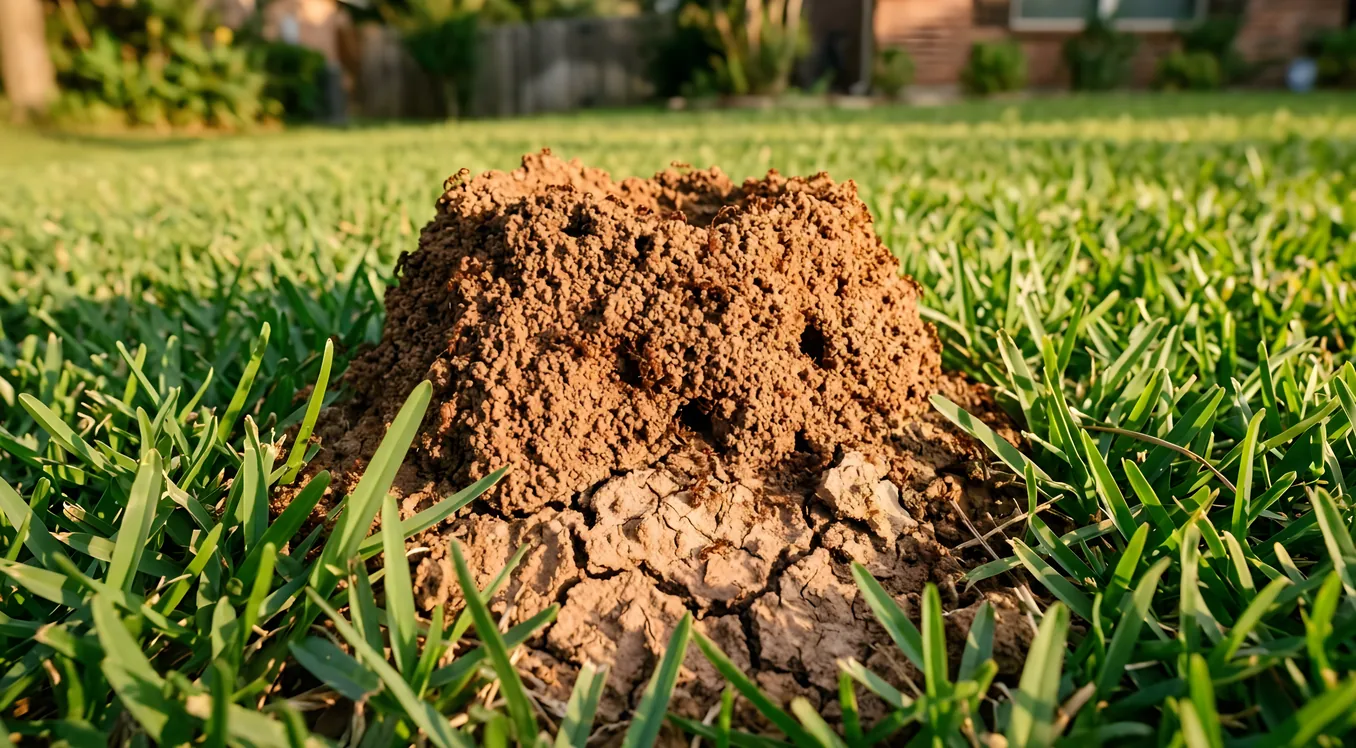
Fire ant treatment in a Little Elm lawn depends on timing, both the season and the time of day, and on hiring a company licensed to apply pesticide, not just fertilizer.
The Lawn Services Explained overview and related pest guides cover the fuller picture.
When Fire Ants Are Active in North Texas Lawns
Fire ants forage when soil surface temperatures sit between 70°F and 90°F. Across most of Texas, that window runs from May through September, so a treatment timed to that stretch reaches far more of the colony than one applied on a whim.
Winter works differently. Soil temperatures cool, and fire ants can still build mounds since the colony retreats deeper into the ground rather than disappearing, but the ants forage very little at the surface during that stretch. A bait treatment set down in December or January has little for the colony to find and carry home, which is part of why extension guidance points homeowners toward the warmer months instead of a fixed calendar date.
Two Recognized Approaches to Fire Ant Control
Extension guidance describes two general approaches to fire ant control, often used together under a framework Texas A&M AgriLife Extension calls the Texas Two-Step Method:
- Broadcast bait treatment: spreading bait across the entire yard, aimed at reducing the overall ant population rather than just the mounds a homeowner can see.
- Individual mound treatment: treating a persistent or especially active mound directly, typically paired with the broadcast step for the mounds that don't respond on their own.
Little Elm homeowners who want to handle a small number of mounds themselves can read the Texas A&M AgriLife Extension publication for the method's own detail. Homeowners who would rather hand the work off can hire a licensed lawn care company instead; the next two sections cover the timing a treatment should follow and the license a company needs to legally apply pesticide, not just fertilizer, on a residential lawn.
Why Bait Timing Matters in Summer Heat
Extension guidance is specific about time of day, not just time of year. During hot weather, bait should go down in the evening only. Once daytime soil temperatures climb past 90°F, a threshold a North Texas summer regularly crosses, bait applied earlier in the day loses its effectiveness quickly.
If a company or a DIY schedule only allows daytime visits during summer, ask about switching to an evening application within the May through September window instead of skipping the treatment.
For a Little Elm lawn getting a broadcast bait treatment during summer, that means the cooler evening hours are the window that actually works, not the middle of a hot afternoon when the mounds happen to be easiest to spot.
Checking a Company's Pesticide License Before You Hire
Not every lawn care company that treats fire ants for hire is licensed to do it. Anyone applying pesticide, general use included, to lawns, trees, ornamental plants, or weeds for pay must hold a license from the Texas Department of Agriculture. That license comes in two forms: an Agricultural Pesticide (Ag Pest) license, requiring certification in the 3A Landscape Maintenance category, the 5 Vegetation Management category, or both, or a Structural Pest Control Service (SPCS) license, requiring certification in the Lawn and Ornamental category, the Weed Control category, or both.
Applicators who apply only fertilizer don't need either license, a useful distinction when comparing quotes: a company offering fertilization and a company offering pesticide-based fire ant treatment aren't necessarily licensed the same way.
Ask whether they hold a Texas Department of Agriculture Ag Pest or Structural Pest Control Service license. A fertilizer-only company is not licensed to apply pesticide. Before hiring anyone to treat fire ants, check the applicator's license; how to check a Texas pesticide license walks through it.
Other Lawn Pests Worth Watching For
Fire ants aren't the only pest worth watching for in a Little Elm lawn. General thinning across the yard, rather than visible mounds, often points to grub damage instead, which tends to show up from mid-summer into early fall. Chinch bugs and fall armyworms are separate problems again, with their own damage patterns covered under other common lawn insects.
For a single place to see every pest and treatment window together, including fire ants, grubs, chinch bugs, brown patch, and fertilizing, the seasonal lawn care calendar lays out the full year at once.
Homeowners ready to compare Little Elm lawn care companies can start with the site's own list rather than searching one at a time, and the broader Lawn Services Explained overview covers every service on this site beyond fire ant treatment.
Frequently Asked Questions
When is the best time to treat fire ants in a Little Elm lawn?
May through September is the strongest window, since that's when soil surface temperatures hold between 70°F and 90°F, the range fire ants actively forage in. A treatment set down outside that stretch, particularly in winter, tends to reach far fewer ants, because colonies forage very little in cooler soil even while mounds are still visible above ground.
Why should bait go down in the evening during hot weather?
Once daytime soil temperatures pass 90°F, a threshold North Texas summers cross regularly, bait applied earlier in the day breaks down and loses its effectiveness quickly. Extension guidance calls for evening application in hot weather instead, when soil temperatures have cooled enough for the bait to stay effective long enough for foraging ants to carry it back to the colony.
Does a company need a special license to treat fire ants for hire?
Yes. Applying pesticide to a residential lawn for pay requires a Texas Department of Agriculture license, either an Agricultural Pesticide license or a Structural Pest Control Service license. A company that applies only fertilizer doesn't need this license, so it's worth asking which one a company holds before comparing quotes for pesticide-based fire ant treatment.