Grub Control: Signs and Treatment Timing
This guide covers when grub damage typically shows up in North Texas, when preventive treatment works best, and how to check a lawn care company's pesticide license before hiring.
What a White Grub Actually Is
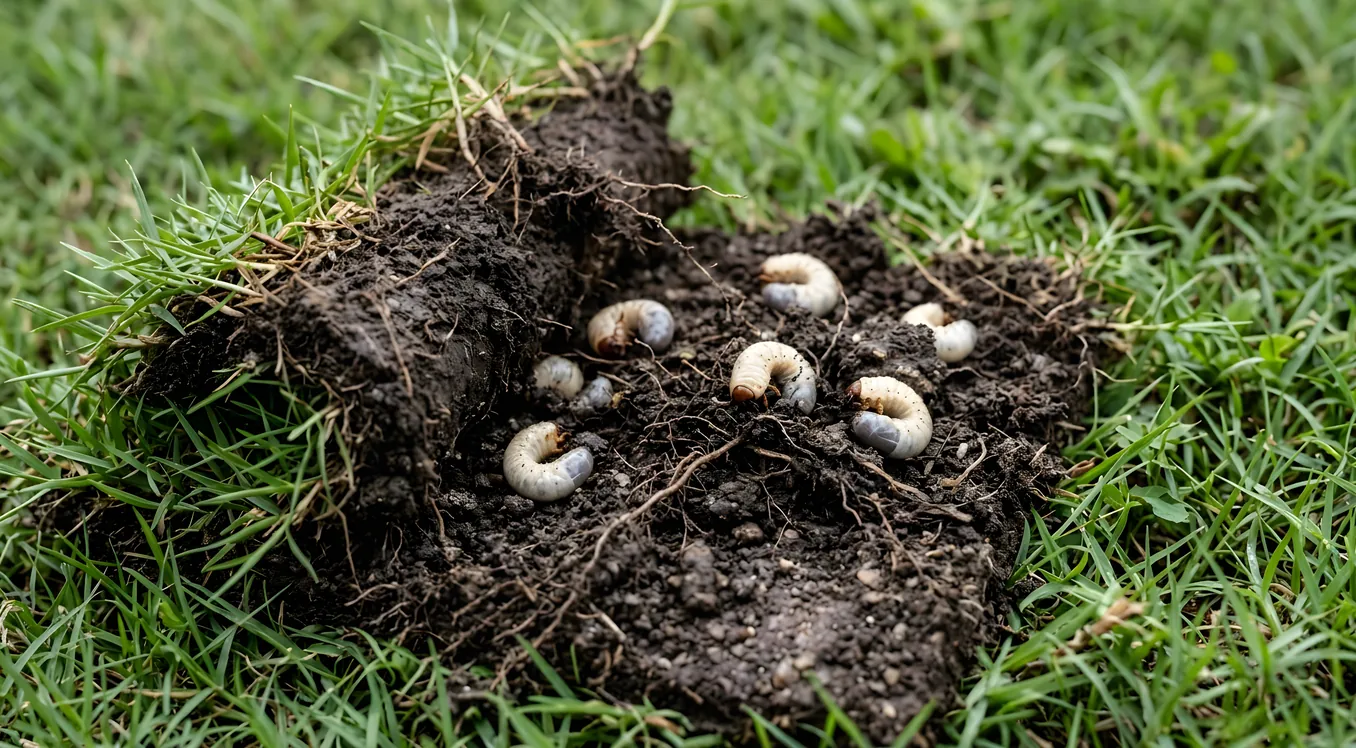
White grubs are the larval stage of certain beetles. They live underground and feed on grass roots, which is why any damage tends to show up on top of the lawn only after the root system underneath has already been affected. A grub isn't something a homeowner is likely to spot without digging into the soil itself.
Grubs are a different pest from the two insects most often confused with them. Fire ants build visible mounds above ground and follow their own seasonal foraging pattern, covered separately on the fire ant treatment page. Chinch bugs and other above-ground feeders leave a different damage pattern, detailed on the chinch bugs and other lawn insects page. Grub biology and treatment timing don't carry over from either pest. Grub control is one topic among several in the full lineup of lawn services explained on this site.
When Grub Damage Shows Up in North Texas
Most white grub damage in North Texas happens mid-summer to early fall, when the larger larvae are actively feeding. According to Texas A&M AgriLife Extension's "White Grubs in Texas Turfgrass", this generally lines up with July in Texas, when grubs reach their most damaging larval stage. Depending on where a lawn sits in the state, that damage window can start as early as June or run as late as October, with warmer areas seeing it sooner and cooler areas later.
This is the window when a Little Elm homeowner might notice something is off with the lawn, not a guarantee that every lawn will show visible damage. A soft or thinning patch of turf during these months is worth a closer look, but it isn't automatically a grub problem. Lawn issues that look like pest damage are sometimes fungal instead; see brown patch for a different cause that shows up on a similar seasonal calendar.
When to Apply Preventive Grub Control
Preventive grub control should go down early spring through early summer, before the grubs in the soil grow larger than about half an inch, according to the same AgriLife guidance cited above. Once larvae pass that size, treatment becomes less effective against the more mature grub.
This is a timing window, not a specific product or an application rate. Texas A&M AgriLife Extension's guidance for North Texas addresses when treatment should go down, not what to use or how much of it to apply, and a homeowner comparing options should expect any company they hire to explain its own product and rate choices directly.
Preventive treatment is a different approach than treating a lawn that already shows damage later in the year. By the time damage is visible in the fall, the grubs responsible have typically grown past the point where early prevention would have worked.
Ask a company for its specific application date range rather than a season name.
Hiring Someone to Treat Grubs
In Texas, anyone who applies pesticide to a lawn for hire needs a license from the Texas Department of Agriculture, either an Agricultural Pesticide license certified in the 3A Landscape Maintenance category or a Structural Pest Control Service license certified in the Lawn and Ornamental category. A company that applies only fertilizer, with no pesticide involved, doesn't need this license.
Homeowners don't have to take a company's word for its licensing status. The Texas Department of Agriculture publishes public rosters of current licensees, including businesses, applicators, and technicians, and checking that list directly is a straightforward way to confirm before hiring.
For a look at several companies serving the area, compare Little Elm lawn care companies on the homepage.
Frequently Asked Questions
Are grubs the same thing as fire ants?
No. Grubs are beetle larvae that feed underground on grass roots, out of sight until damage shows up much later. Fire ants are a separate insect entirely, building visible mounds above ground and following their own seasonal pattern. See the fire ant treatment page for that timing, which runs on a different calendar than grub control does.
When should grub control go down in North Texas?
As a preventive step, treatment works best early spring through early summer, applied before grubs in the soil grow past about half an inch. Once larvae reach that size, treatment has a harder time controlling them. Waiting until damage appears later in the year means dealing with a more mature, tougher grub instead of catching the problem early.
Does a lawn care company need a license to apply grub control in Texas?
Yes, if pesticide is involved. Texas requires an Agricultural Pesticide license or a Structural Pest Control Service license from the Texas Department of Agriculture for anyone applying pesticide to lawns for hire. A company offering only fertilizer service doesn't need this license. Homeowners can check TDA's public licensee rosters directly rather than relying on a company's own claim.