Common Lawn Insects in North Texas Yards
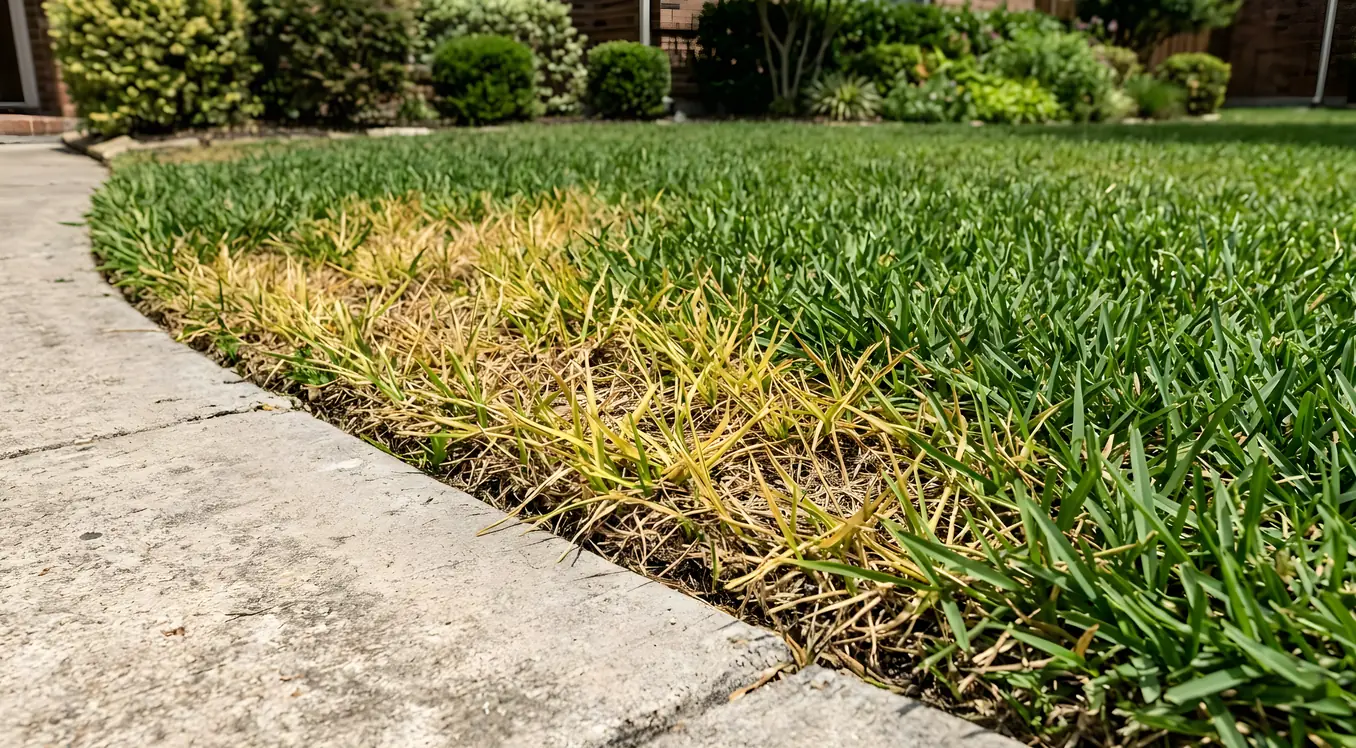
Three insects account for most non-fungal lawn damage in North Texas: southern chinch bugs, white grubs, and fall armyworms. Each one leaves a different kind of damage at a different time of year, and this page walks through how to tell them apart.
Chinch bugs mainly target St. Augustine grass, and their feeding produces irregular-shaped dead patches that can look a lot like brown patch fungus at first glance. The two aren't the same problem: brown patch spreads in a circular or semi-circular pattern, while chinch bug damage is ragged and uneven around the edges. White grubs feed underground and do their worst damage from mid-summer into early fall, with July typically the peak month in Texas. Fall armyworms move fast once they start, with outbreaks usually following heavy rain in August and September and hitting lawns hardest in late summer and early fall. Homeowners unsure which grass type they're managing can check grass types grown in North Texas before working through the sections below, since chinch bugs mainly affect St. Augustine while grubs and armyworms show up on both St. Augustine and Bermuda lawns.
What's Actually Eating Your Lawn: Three Insects to Rule Out First
Southern chinch bugs, white grubs, and fall armyworms cause most of the insect damage found in North Texas lawns. Each has its own look, its own timing, and its own preferred feeding spot on the plant, so ruling them in or out starts with the shape and location of the damage.
Brown patch fungus is a common look-alike cause worth ruling out first, since it spreads in a circular or semi-circular pattern rather than the irregular shape an insect leaves behind. The sections below cover each of the three insects in turn, starting with the one most often confused with that fungus. See the other lawn services covered here.
Southern Chinch Bugs: Spotting the Difference From Brown Patch
The southern chinch bug (Blissus insularis) is one of the most important insect pests of St. Augustinegrass in Texas, according to Texas A&M AgriLife Extension, with the heaviest damage typically found in the Gulf Coast region and the southern half of the state. It's still worth knowing about in North Texas, since it's the insect most likely to be confused with a fungal problem.
Damage normally becomes visible once populations reach around 20 to 25 chinch bugs per square foot. Below that threshold, feeding is hard to spot; above it, the lawn starts showing dead or dying patches that can spread if the population keeps growing.
Chinch bug damage typically becomes visible at 20-25 bugs per square foot of St. Augustine lawn, per Texas A&M AgriLife Extension's Chinch Bug Management in Lawns guidance.
The shape of the dead patch is the fastest way to tell chinch bugs from brown patch fungus. AgriLife notes that brown patch symptoms usually show up as a circular or semi-circular pattern, while chinch bug feeding produces irregular-shaped dead or dying areas with no clean edge. Checking the outline of the damage before doing anything else can save a homeowner from treating the wrong problem.
Count before treating. Chinch bug damage rarely shows below 20-25 bugs per square foot, so a thin dead patch with a low bug count may point back to brown patch or another cause instead.
White Grubs: The Damage Happens Underground First
White grubs feed on roots below the surface, so the damage is already established by the time it shows up in the grass above. According to Texas A&M AgriLife Extension, most grub damage happens mid-summer to early fall, when the larger larvae are actively feeding. In Texas, that generally means July for the most damaging stage, the third instar, though damage can appear anywhere between June and October depending on location within the state.
Preventive treatment timing matters more than reactive treatment for grubs. AgriLife recommends applying preventive treatment in early spring through early summer, before the grubs grow larger than about half an inch. Waiting until the damage is visible in the grass means the larvae are already past the size where prevention works best.
Scouting for fall armyworms and treating grubs often fall in the same July window, so a mid-summer lawn check is worth covering both pests at once instead of two separate visits.
For a full look at identifying grub damage and timing treatment around it, see signs of grub damage, which covers this insect in more depth than fits here.
Fall Armyworms: North Texas's Fastest‑Moving Lawn Pest
Fall armyworms move through a lawn faster than either chinch bugs or grubs, and their outbreaks are harder to predict. Texas A&M AgriLife's Department of Entomology notes that outbreaks are difficult to forecast but tend to follow rain in early fall; above-average rainfall in August and September favors higher egg survival, and outbreaks usually happen in late summer into early fall.
Feeding activity isn't constant through the day. Fall armyworms feed at any time, day or night, but they're most active in the early morning and late evening, which is also the easiest window to spot them in the grass if a lawn is showing early damage.
Texas A&M AgriLife's own St. Augustinegrass maintenance calendar lists scouting for fall armyworms as a July task, right alongside curative white grub treatment if it's needed. Watching for both insects on the same schedule makes sense given how closely their active periods overlap in North Texas.
When to Call a Licensed Applicator
Anyone who applies pesticide to lawns for hire in Texas has to be licensed by the Texas Department of Agriculture, either through an Agricultural Pesticide license or a Structural Pest Control Service license. That requirement applies regardless of which of the three insects above is the culprit.
Small, early-caught chinch bug or grub problems are often manageable without hiring anyone, especially when they're caught before the damage spreads. Widespread damage, or a fast-moving problem like a fall armyworm outbreak, is a different situation, and getting a licensed opinion at that point is worth it. Anyone weighing the DIY-versus-hire decision can compare local lawn care companies to see who covers insect treatment in the area.
Frequently Asked Questions
What does chinch bug damage look like in St. Augustine grass?
Chinch bug feeding produces irregular-shaped dead or dying patches with ragged edges, usually visible once bug counts reach around 20 to 25 per square foot. That irregular shape is the main way to tell chinch bug damage apart from brown patch fungus, which spreads in a more circular or semi-circular pattern. Checking the patch outline first is the quickest way to rule one cause in or out.
Is it brown patch or a lawn insect causing my dead grass?
Look at the shape of the dead patch first. Circular or semi-circular patches point to brown patch fungus, while irregular, ragged-edged patches point to an insect problem like chinch bugs. The two causes need different responses, so getting the shape right before doing anything else helps avoid treating the wrong problem. The brown patch guide covers fungal symptoms and timing in more depth.
When do white grubs damage North Texas lawns?
Most grub damage shows up mid-summer to early fall, with July typically the peak month in Texas for the most damaging larval stage, the third instar. Damage can appear anywhere from June to October depending on location within the state. Preventive treatment applied earlier, in spring through early summer, works better than waiting until the damage is already visible.
When are fall armyworms most likely to hit a North Texas lawn?
Fall armyworm outbreaks are hard to predict but tend to follow above-average rain in August and September, with most outbreaks happening in late summer into early fall. They feed at any time of day but are most active early morning and late evening. Texas A&M AgriLife's own St. Augustinegrass maintenance calendar lists scouting for fall armyworms as a July task.