Tree and Shrub Feeding Alongside Lawn Care
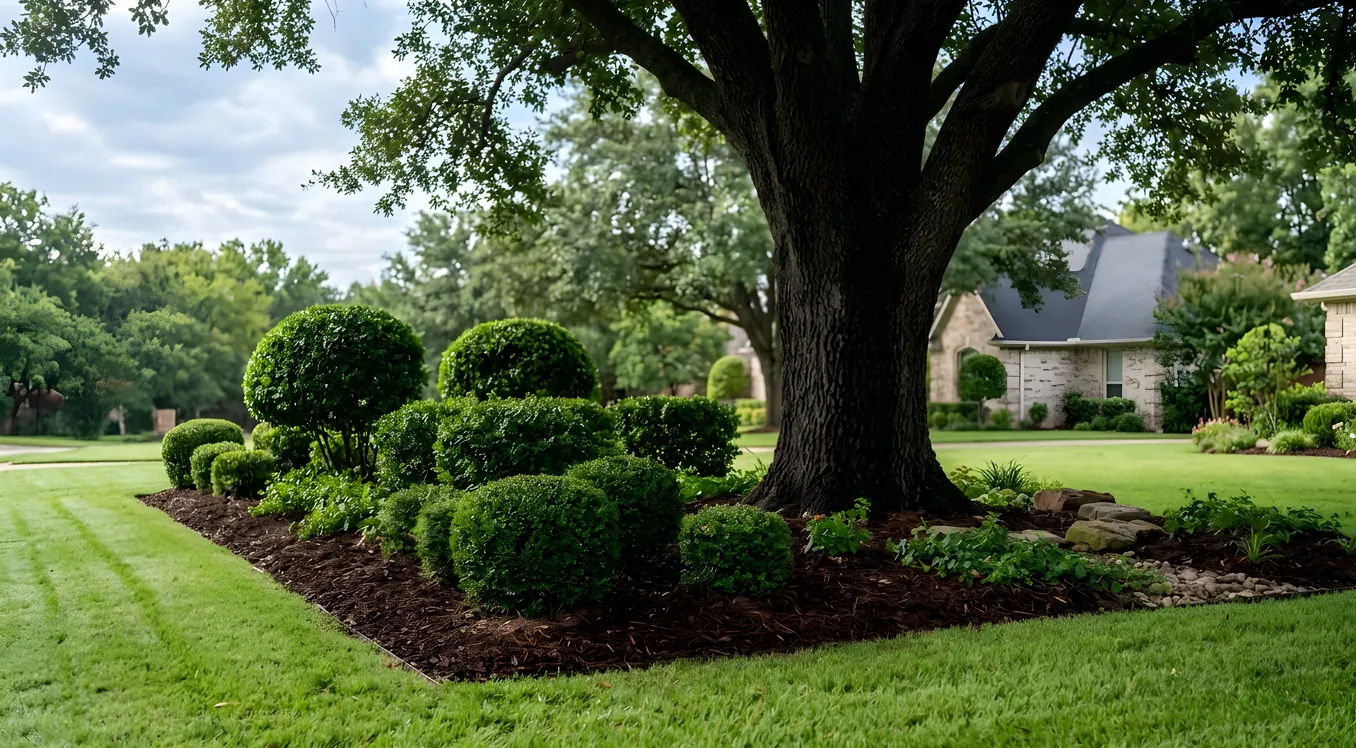
Tree and shrub fertilization feeds the woody plants in a yard, trees, shrubs, and hedges, rather than the turfgrass a lawn program is built around. Some lawn companies offer this feeding, so it's worth asking whether it's included or priced separately.
What Tree and Shrub Fertilization Covers
Tree and shrub fertilization is the feeding of woody landscape plants, as distinct from fertilizing turfgrass. The same name can mean two different things: a fertilizer-only visit, or a broader program that also treats insects or disease on the trees and shrubs, so it's worth asking which one a company means. It can appear as one line in a larger plan covering other lawn services, including fertilization and weed control, or as a separate service.
When Trees and Shrubs Need Feeding Beyond the Lawn
In the words of Texas A&M AgriLife Extension, "In many yards, a good lawn maintenance program may eliminate the need for supplemental fertilization for trees and other woody plants in the lawn." Extra fertilizer is occasionally needed for a tree whose roots are boxed in by pavement or other structures. Shrubs and vines planted as screens or borders are another case, since AgriLife points out that they are often forgotten when the lawn is fed.
Lawn fertilization follows its own timing, tied to when grass is actively growing. Woody plants run on a different calendar. AgriLife generally points to late winter, just ahead of spring growth, as the time to fertilize them, and to mid-winter on heavy clay soil, after the plant has gone fully dormant.
Signs a Tree or Shrub May Need Feeding
A few general visual cues are worth flagging rather than diagnosing. Leaves that turn pale or yellow without a seasonal cause, a canopy thinner than past years, or slower new growth can point toward a nutrient issue, though they can point to something else entirely. The goal isn't to self-treat. It's to have a concrete reason to ask a professional to look.
Fertilizer Runoff and Little Elm's Water Rules
Little Elm's stormwater program lists local waterways, including Lewisville Lake and several nearby creeks, as receiving bodies for runoff that picks up debris and chemicals over surfaces such as lawns. Fertilizer left on a lawn or planting bed can move the same way if it isn't absorbed where applied. Statewide, the Texas Commission on Environmental Quality's Healthy Lawns Healthy Waters program ties fertilizer timing and quantity to water quality generally, described as statewide guidance rather than specific to any one Texas lake or town.
Little Elm's Clay Soil and Root Health
Denton County, where Little Elm sits, falls within the USDA type-location region for the Sanger soil series, a clayey, slowly permeable soil, and the wider Grand Prairie and Blackland Prairie region is described as having significant clayey soils generally. That's a regional characteristic, not a description of any single Little Elm lot, since no source maps a soil series to a specific property. It's still one reason root health can be harder to maintain.
Asking About Tree and Shrub Feeding When You Hire
In Texas, anyone applying pesticide for hire, including on ornamental plants, trees, lawns, or weeds, needs a license from the Texas Department of Agriculture. A company applying fertilizer only doesn't need that license for that portion of the work. This matters for tree and shrub programs specifically, since some include insect or disease treatment along with fertilizer rather than fertilizer alone. Ask what the program includes and whether the applicator is licensed. See checking a pesticide license, or compare Little Elm lawn care companies.
Ask which trees and shrubs a program actually covers, such as border shrubs or trees beside a driveway or street.
Frequently Asked Questions
Is tree and shrub fertilization different from lawn fertilization?
Yes. Woody plants run on a different calendar than turfgrass. They are generally fed in late winter, just ahead of spring growth, or, on heavy clay soil, in mid-winter once the plant is dormant. In many yards a good lawn program may already make extra fertilizer unnecessary for trees in the lawn. Trees with boxed-in roots occasionally need more, and border or screen shrubs are often left out when the lawn is fed. Whether it's included or priced separately depends on the company.
Does fertilizing trees and shrubs affect Little Elm's water rules?
Fertilizing itself is not covered by the Town's watering-day schedule, but runoff is a separate concern the Town flags for lawns and other surfaces broadly. Keeping fertilizer where it is applied, rather than letting it wash off a lawn or bed, is what keeps it out of storm drains and away from local creeks and Lewisville Lake.