Lawn Mowing Basics: Height, Frequency, and the One‑Third Rule
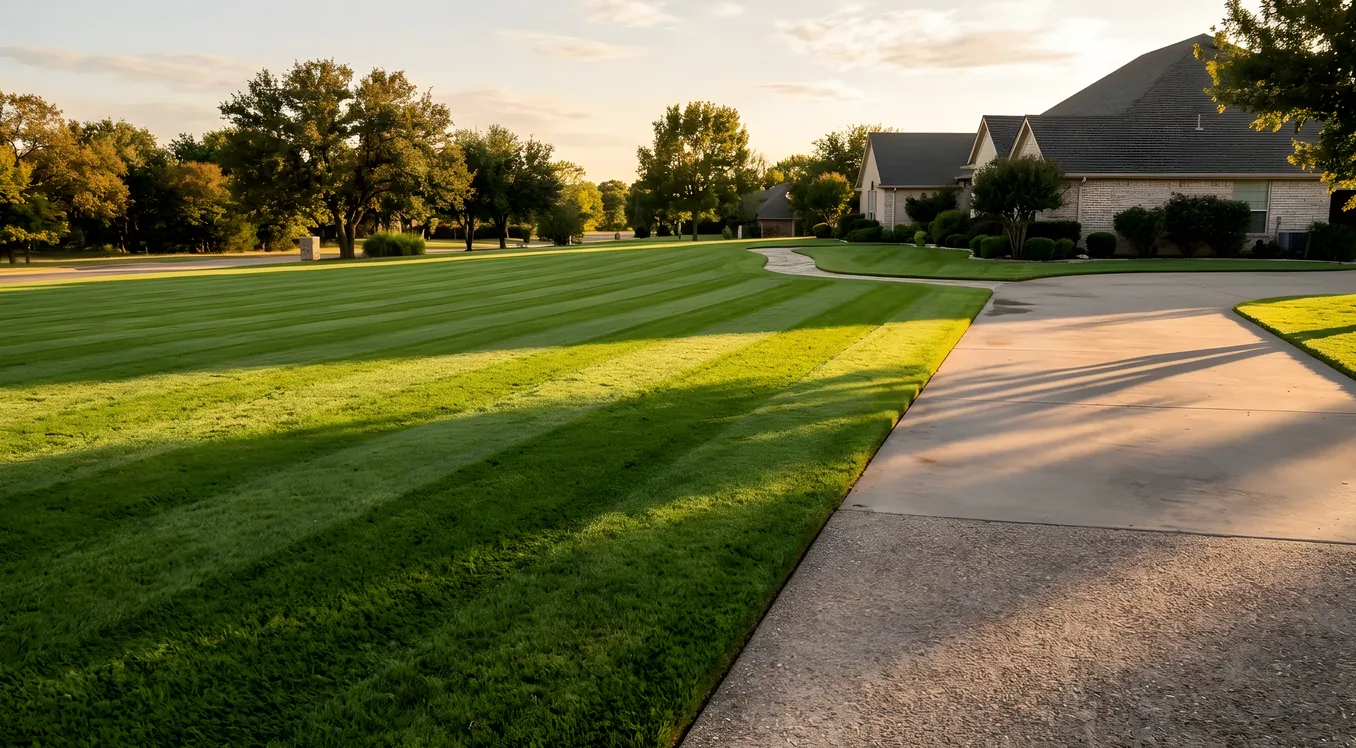
The one-third rule for mowing means never cutting off more than a third of the grass blade in a single pass. For Bermudagrass home lawns, Texas A&M AgriLife Extension recommends a mowing height of 1 to 2 inches with a rotary mower. Put those two numbers together and you get the real schedule: once Bermuda reaches roughly 3 inches, it's time to mow, whether that happens in five days or twelve.
During the growing season, AgriLife's guidance is to mow weekly, or as often as it takes to avoid scalping. Grass growing fast through a warm, wet week needs a cut sooner than grass sitting through a dry stretch. The one-third rule, not a fixed day of the week, decides when a Little Elm lawn actually needs the mower.
What the One‑Third Rule Means for Your Mower Height
Removing more than a third of a grass blade in one mow strips away leaf tissue the plant uses to produce energy through photosynthesis. A lawn cut on schedule loses a third of its height and keeps two-thirds of its working leaf surface. A lawn left for two or three extra weeks and then scalped back to the target height loses far more than a third at once, and the plant has to recover from that all in one hit instead of a little at a time.
For Bermudagrass, that means setting the mower deck to keep the lawn between 1 and 2 inches, and mowing again once growth pushes the grass to roughly a third taller than that target. A deck set too low compounds the problem: it turns an on-time mow into a scalp even when the calendar says the lawn is right on schedule.
Bermudagrass home lawns should be mowed to a height of 1 to 2 inches, and the one-third rule means never removing more than a third of the blade length in a single cut, per Texas A&M AgriLife Extension's Bermudagrass Home Lawn Management Calendar.
How Often That Means Mowing Through the Season
AgriLife's guidance translates to mowing weekly during the growing season, or more often if the lawn is putting on enough growth to risk scalping between cuts. Neither number is fixed. A wet spring week can push Bermuda past the one-third mark in five days, while a dry August stretch can carry the same lawn ten or twelve days between mows without breaking the rule.
"Mowing must often be done weekly during the growing season, or as often as necessary to prevent scalping... never remove more than 1/3 of the leaf tissue at once." (Texas A&M AgriLife Extension)
Little Elm's growing season runs warmer and longer than a lot of homeowners expect, and the mowing cadence shifts as the year moves from spring green-up into summer heat and back down through fall. For the month-by-month version of how that shifts, see the seasonal lawn care calendar.
Bermuda vs. St. Augustine: Know Your Grass Before You Set the Deck
The 1 to 2 inch mowing height above is specific to Bermudagrass. Little Elm lawns commonly run one grass or the other, and sometimes both in different parts of the same yard, so setting a mower deck without knowing which grass you're cutting is a guess.
Texas A&M AgriLife's AggieTurf guide recommends a mowing height of 2.5 to 3.5 inches for St. Augustinegrass, mowed weekly with a rotary mower, well above the Bermuda number. If your lawn is St. Augustine, start by confirming what you're actually growing at Grass Types for Little Elm Lawns before settling on a deck height, rather than borrowing the Bermuda number for a different grass.
Check your mower's cutting height before the first mow of spring. A blade set too low for last year's fall cut can scalp a lawn that's still waking up.
Clippings: Bag Them or Leave Them?
Whether to bag clippings or leave them on the lawn comes down to your mower and how much you're cutting off, not a rule everyone follows the same way. A mulching mower cutting on schedule, following the one-third rule, leaves clippings small enough to settle into the lawn without smothering it. A mower without a mulching blade, or a lawn that's gone past the one-third mark and needs a heavier cut, tends to leave clumps that are easier to bag and remove than to rake out later.
Why Staying on Schedule Matters in Little Elm
Little Elm has its own rule for how tall grass and weeds are allowed to get on a property, separate from anything AgriLife recommends for plant health. See Little Elm's Grass Height Rule for the specifics before assuming a week or two of skipped mowing is fine either way.
Mowing on the one-third-rule schedule also keeps a lawn in shape for whatever else it needs that season, whether that's a fertilization program running on its own calendar or weed control that works better on grass that isn't stressed by scalping. For the full range of what Little Elm lawn care can include, see Lawn Services Explained.
Homeowners who'd rather hand mowing off than track the one-third rule themselves can compare how several Little Elm-area companies describe their mowing programs on the homepage directory, or start with Questions to Ask Before Hiring Lawn Care to vet a company first.
Frequently Asked Questions
What is the 1/3 rule for mowing?
The one-third rule means never cutting off more than a third of a grass blade in a single pass. For Bermudagrass, keeping the lawn between 1 and 2 inches and mowing again once growth pushes it roughly a third taller keeps the plant within that limit. Skipping cuts and mowing well past that point strips away more leaf tissue at once, which stresses the lawn instead of maintaining it.
Should I cut my lawn every week or every 2 weeks?
Neither interval is fixed. Texas A&M AgriLife Extension recommends mowing weekly during the growing season, or as often as it takes to avoid scalping, with the one-third rule setting the real timing. A wet week can push Bermudagrass past that mark in five days, while a dry stretch might stretch ten or twelve days between mows without breaking the rule. Watch the grass, not the calendar.
What month are you not supposed to mow?
No specific month applies here. Grass growth slows as the weather cools, so mowing frequency naturally drops through fall and winter rather than stopping on a fixed date. The one-third rule still applies whenever the grass is actively growing, even if that means longer gaps between cuts. For how mowing needs shift month by month, see the seasonal lawn care calendar.
Is it better to leave cut grass on the lawn or pick it up?
Either approach is a normal choice, and which one works better depends on the mower and how much is being cut off. A mulching mower running on the one-third-rule schedule leaves clippings small enough to settle into the lawn without smothering it. A mower without a mulching blade, or a lawn that has grown past that point and needs a heavier cut, tends to leave clumps that are easier to bag than to rake out later.